
Are Solar Panels Worth It in 2026?
Solar panel payback periods, incentives, and real-world savings. Use our calculator to see if solar makes sense for your home and location.
The Short Answer
Solar panels are worth it for most homeowners who plan to stay in their home at least 7–10 years, have a roof in good condition, and live in an area with decent sun exposure. The average payback period is 8-12 years, after which your electricity is essentially free.
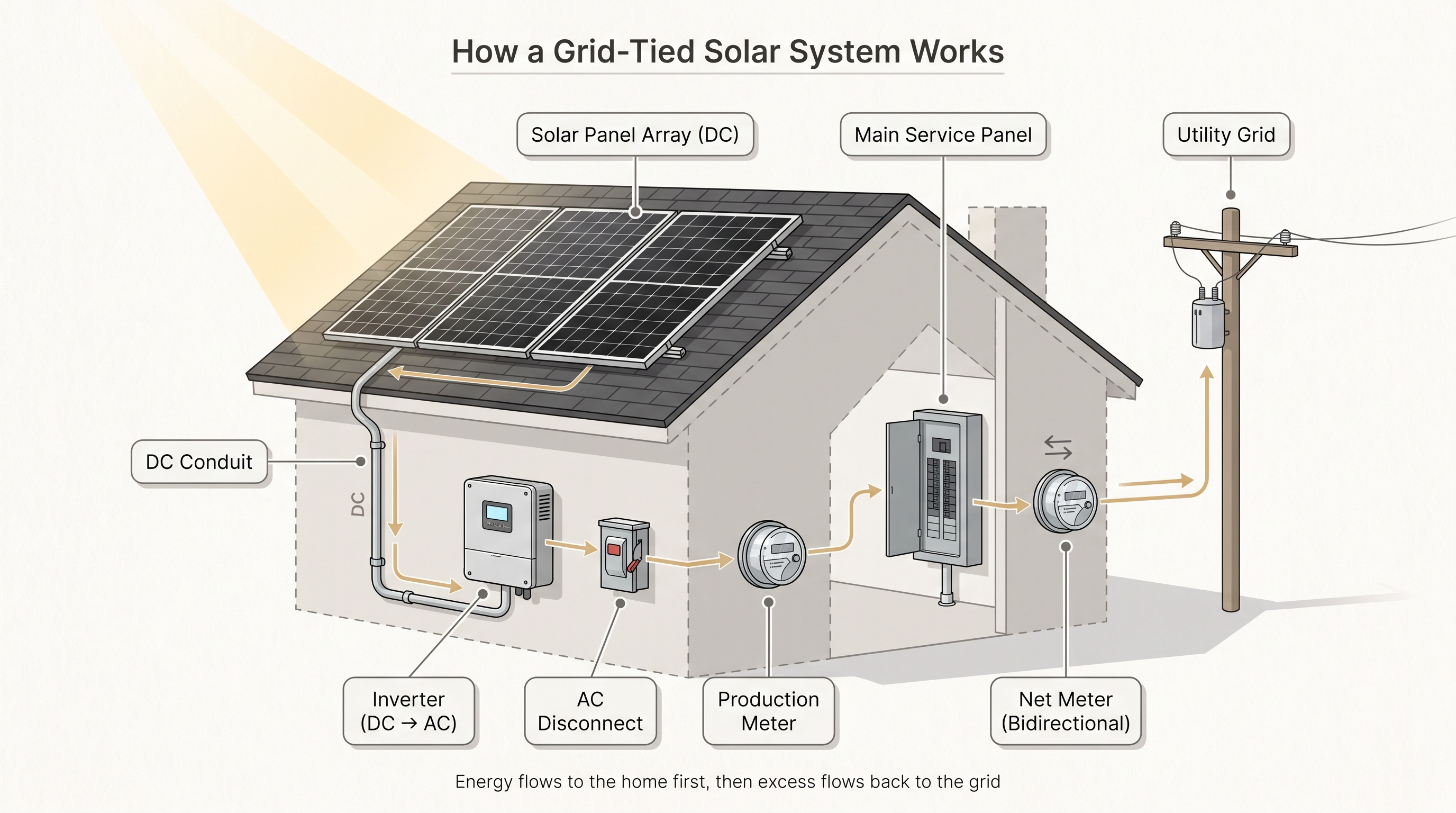
A typical grid-tied solar installation with net metering
The Math: A Real Example
Let's look at a typical 6kW system in Phoenix, Arizona:
- System cost: $18,000 before incentives
- Federal tax credit (30%): -$5,400
- Net cost: $12,600
- Annual savings: $1,800 (at $0.15/kWh)
- Payback period: 7 years
- 25-year savings: $32,400 (after payback)
Payback Varies Dramatically by State
Your location matters more than almost anything else. Sun hours, electricity rates, and state incentives all affect payback:
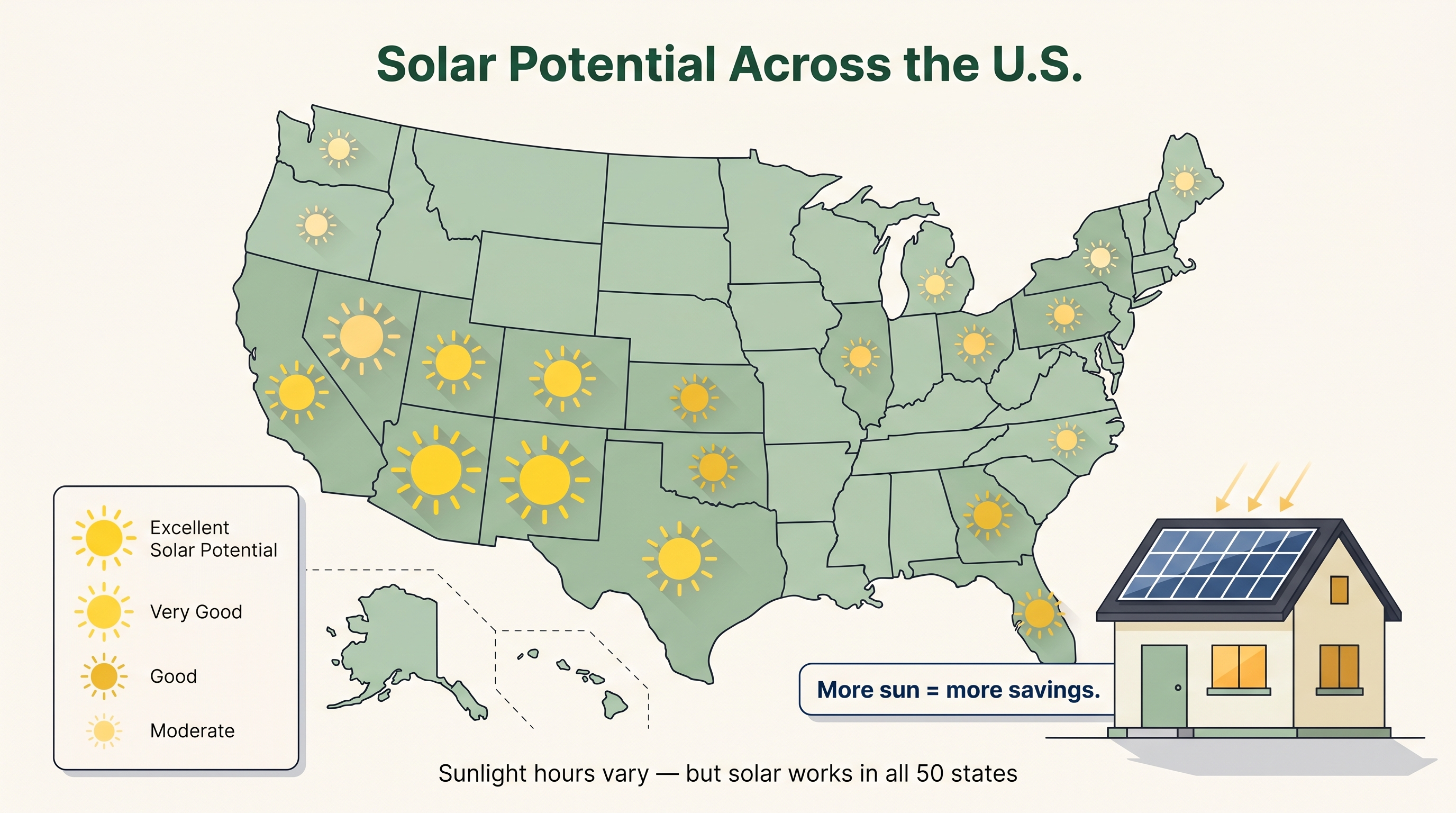
Solar payback is fastest in sunny, high-rate states like California and Arizona
| State | Avg. Sun Hours/Day | Electricity Rate | Est. Payback | 25-Year Savings |
|---|---|---|---|---|
| Arizona | 6.5 | $0.14/kWh | 6-8 years | $35,000-$45,000 |
| California | 5.5 | $0.32/kWh | 5-7 years | $55,000-$75,000 |
| Texas | 5.5 | $0.14/kWh | 8-10 years | $25,000-$35,000 |
| New York | 4.0 | $0.24/kWh | 8-11 years | $30,000-$40,000 |
| Florida | 5.5 | $0.15/kWh | 7-9 years | $28,000-$38,000 |
| Washington | 3.5 | $0.11/kWh | 12-15 years | $10,000-$18,000 |
| National Avg. | 4.5 | $0.17/kWh | 8-12 years | $20,000-$35,000 |
Financing Options: Cash vs. Loan vs. Lease
How you pay for solar changes the math significantly:
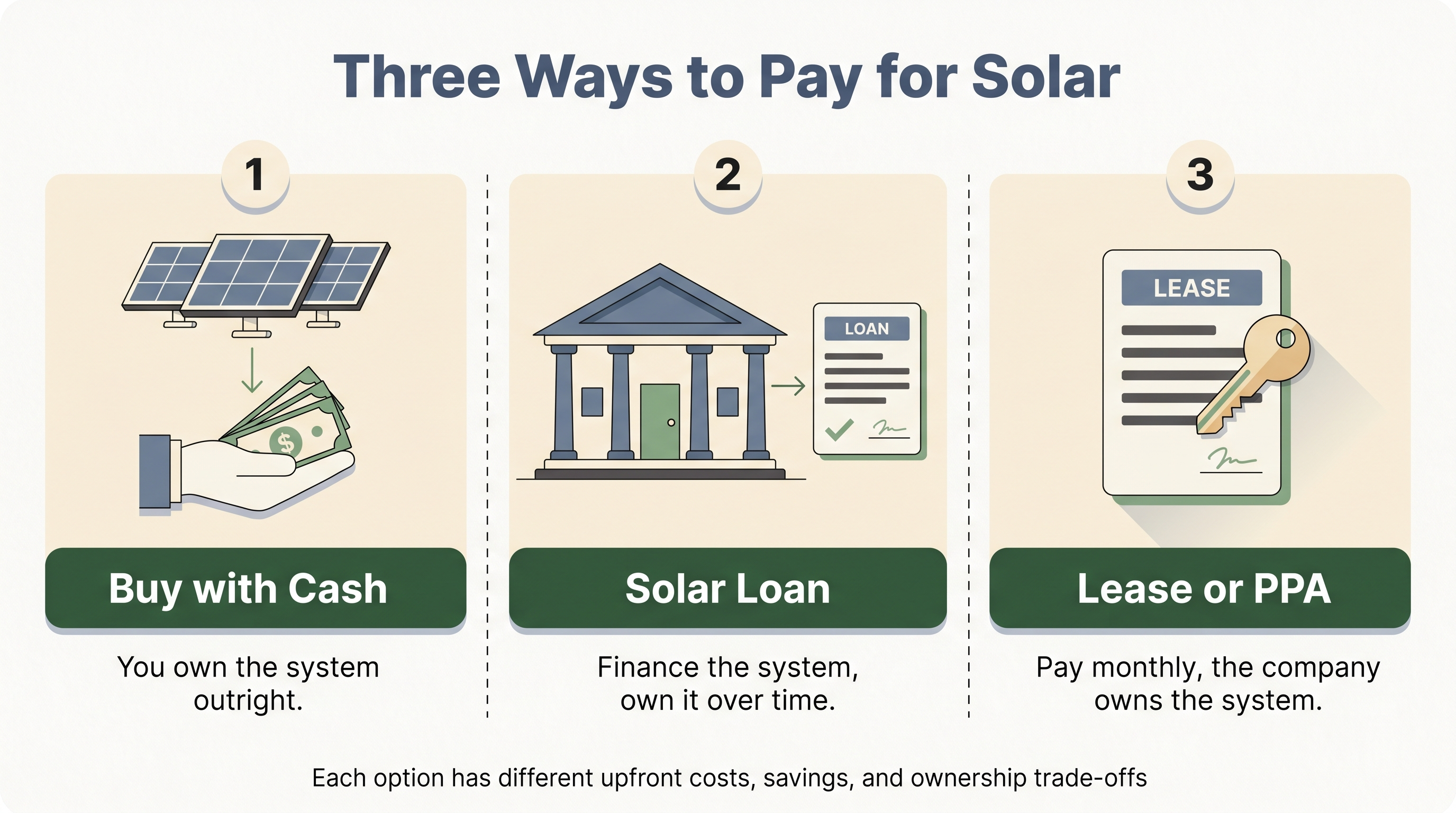
Cash purchase yields the highest lifetime savings, but loans and leases have lower barriers
| Method | Upfront Cost | Monthly Payment | You Own Panels? | Best For |
|---|---|---|---|---|
| Cash purchase | $12,600-$25,000 | $0 | Yes | Highest long-term savings |
| Solar loan | $0 | $100-$250 | Yes | No cash upfront, still get tax credit |
| Lease/PPA | $0 | $80-$150 | No | Lowest savings, no maintenance worry |
What About Panel Degradation?
Solar panels don't stop working after 25 years — they just produce slightly less each year. Most panels degrade at about 0.5% per year, meaning after 25 years they're still producing at roughly 87-88% of their original capacity.
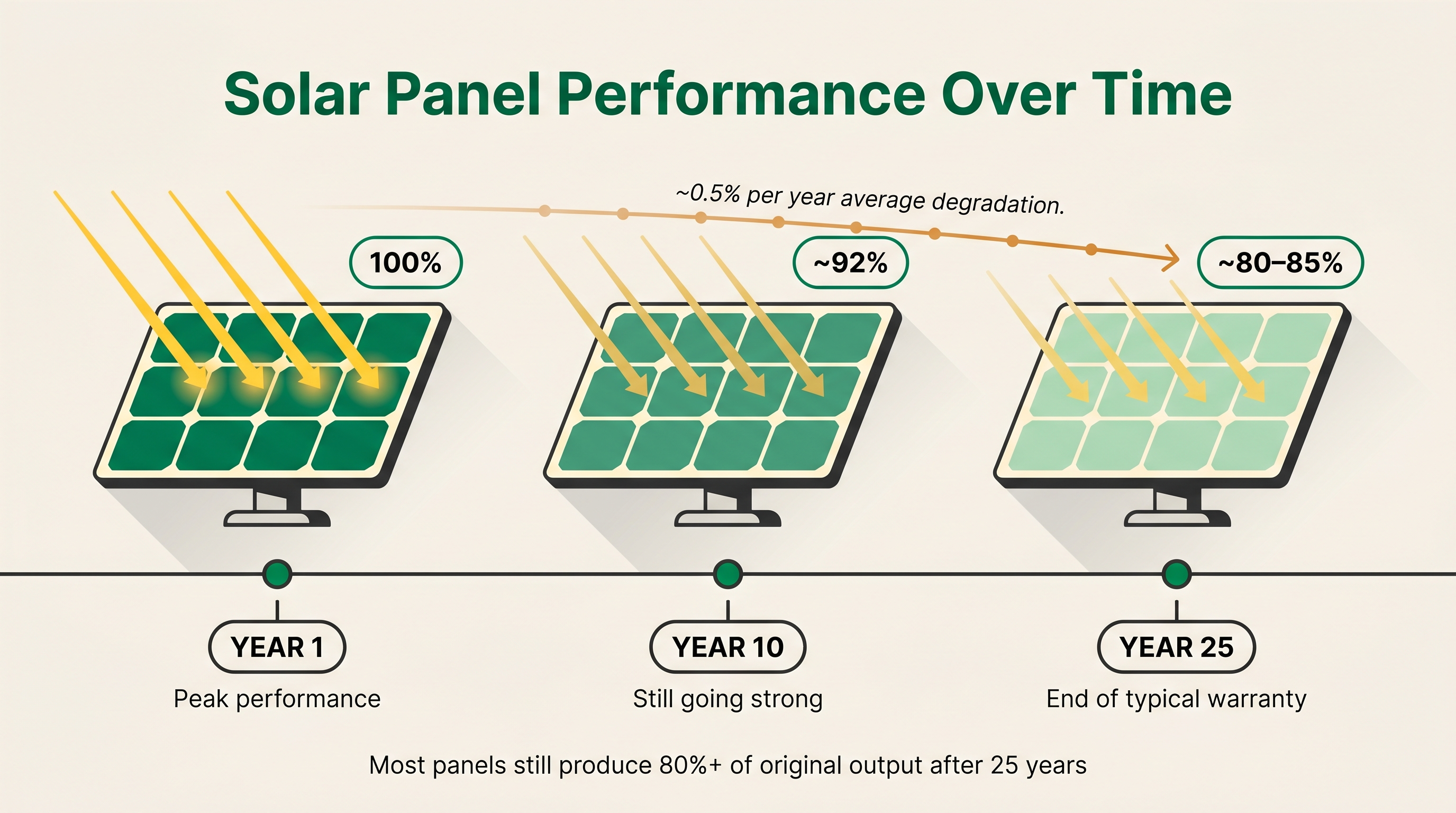
Modern panels retain 85%+ efficiency even after 25 years of operation
- Year 1-10: 98-99% efficiency — essentially no noticeable drop
- Year 11-20: 95-90% efficiency — still strong production
- Year 21-25: 90-87% efficiency — warranty typically ends here
- Year 26+: 85%+ efficiency — panels keep working, just slower
When Solar Doesn't Make Sense
- You plan to move within 5 years (won't recoup investment)
- Your roof needs replacement soon (do roof first)
- Heavy shading from trees or buildings
- Your electricity rates are very low (under $0.10/kWh)
- You live in an area with frequent hail or hurricanes
2026 Incentives Still Available
- Federal Solar Tax Credit: 30% through 2032
- State rebates: Vary by state; California, New York, Massachusetts have strong programs
- Net metering: Sell excess power back to the grid (rules vary by utility)
- SRECs: Solar Renewable Energy Certificates in some states
Bottom Line
Use our Solar Panel Payback Calculatorto get a personalized estimate based on your electricity bill, location, and roof specs. The numbers don't lie — and for most homeowners, they look very good in 2026.
Related Reading
- How Much Does a New Roof Cost? — Make sure your roof is ready before installing solar.
- DIY Solar: Buy Panels and Hire an Electrician — A hybrid approach that can save thousands.
- Why Is Solar Installation So Expensive? — Breaking down where your money actually goes.
- HELOC vs. Cash-Out Refinance — Ways to finance a solar project using home equity.
Frequently Asked Questions
Related Articles
Enjoyed This Guide?
Get one homeowner tip per week. No spam, unsubscribe anytime.